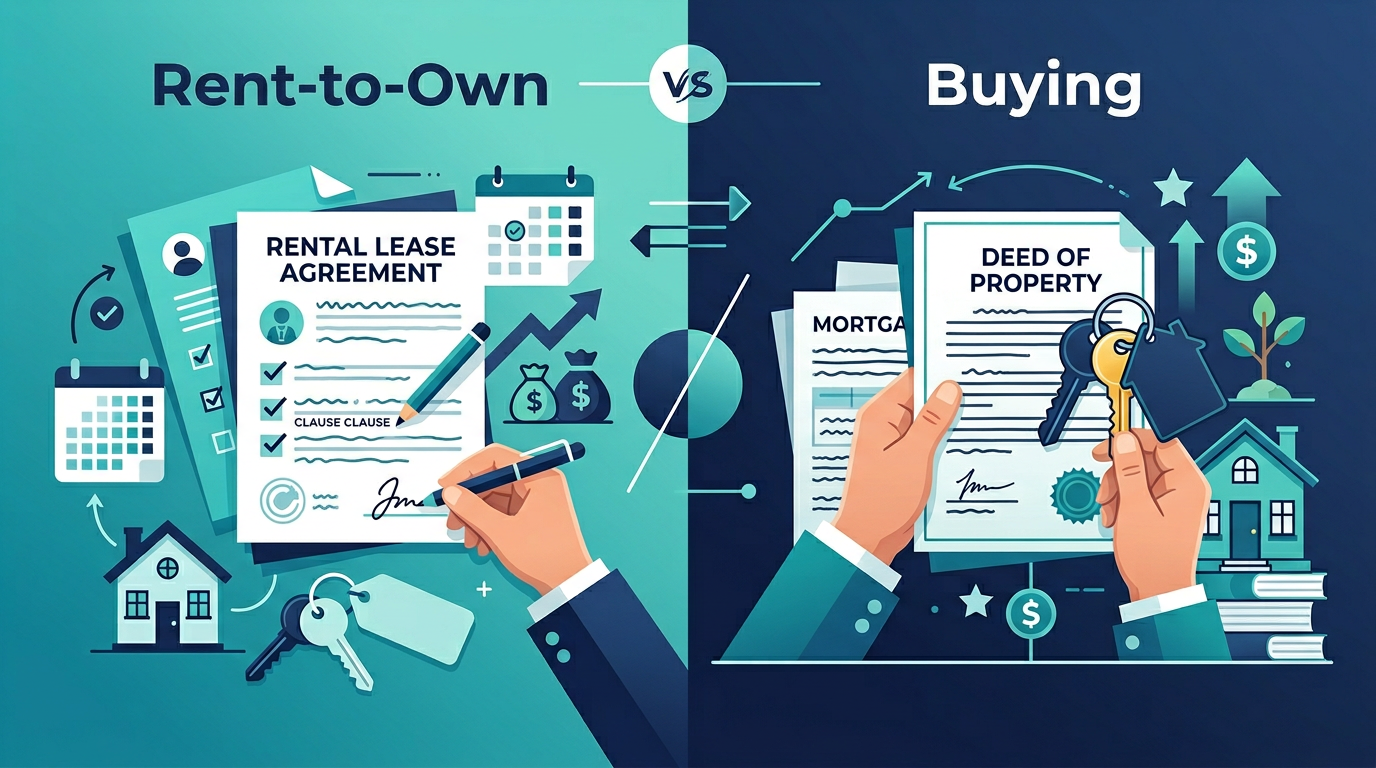
Buyers comparing rent to own with owner financing are really asking: which path gives me ownership, and which feels safer or faster? The labels overlap in conversation, but the legal posture is different.
Rent to own (lease-option / lease-purchase)
- You start as a tenant with a lease, often paired with an option to buy later (or a scheduled purchase in a lease-purchase).
- A portion of rent may be credited toward purchase—only if the contract clearly says so.
- No ownership until you exercise the option (or complete the purchase), subject to your agreement and state law.
Owner financing
- You are buying now with the seller acting as lender.
- Payments generally build equity according to amortization and your note—again, structure matters.
- Title treatment depends on deed-of-trust vs. land-contract style structures (see our post on how owner financing works).
Main difference in one line
Rent to own = tenant with an option (or path) to buy. Owner financing = buyer with seller financing documented from the start of the purchase.
Resources
Download educational samples from Owner Financing Documents and manage your pipeline in app.ownerfi.app. More on the OwnerFi blog and About page.
OwnerFi Seller Financing App
Get the OwnerFi App on Google Play. Sellers can track loans, payments, late fees, and history, share documents, and message buyers. Buyers can view schedules and amortization tables, see reminders, and stay in touch—practical tools for managing owner financing day to day.
Pair the app with OwnerFi Pro in your browser. The app is for managing loans set up with your title company or lender; it does not create a contract or change your existing legal obligations.